
Blog: Legislative Health Mandates Increase Premiums for Working Families

The Kentucky General Assembly is now a little over a month into their 2026 legislative session. As legislators examine how they can enhance affordability of health care, one solution is quite apparent − lawmakers can and should halt introducing and passing health insurance mandate bills.
What are health insurance mandates and how do they impact consumers?
Mandates dictate what coverage insurers can sell and what coverage consumers can buy as they relate to specific treatments, benefits, and providers. While often well-intended, government mandates typically result in higher premiums and can reduce access to care. Competition in the marketplace is the better approach to determining the health benefits offered to consumers.
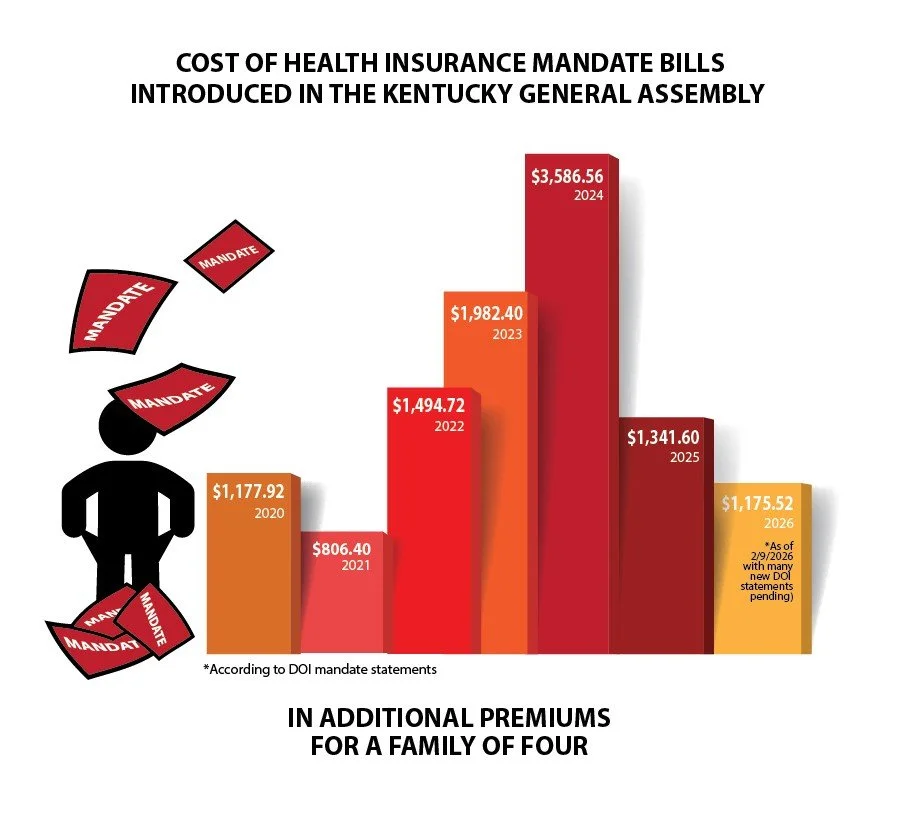
Mandates push up the price of health premiums and there has been an alarming increase in the number of mandates filed in recent legislative sessions.
The Legislative Research Commission issues mandate statements on most mandate legislation to evaluate the per member per month impact of the bills to health care premiums.
If all mandate bills proposed in the 2025 session had been enacted, they would have increased premiums by $1,341.60 per year for a family of four.
As of February 10, 2026, if all mandate bills proposed in the 2026 session were enacted (many are still being scored by state actuaries), premiums would increase by $1,175.52 annually for a family of four.

Small Businesses and Their Employees Are Hardest Hit
Small businesses pay the price for government overreach because they do not have the resources to self-insure and lack bargaining power in the market to achieve lower health insurance premiums. Cost pressures force smaller employers to trim insurance or other benefits to their employees, to increase the share their employees pay for premiums, or to reduce wages or eliminate health coverage altogether.
KAHP will continue to educate legislators and consumers on the costs of health care mandates introduced in the 2026 session.